|
OROGENY : How Mountains Are Formed : |
Mountains can be formed in a
couple of different ways. Different kinds of mountains are formed
different ways. There are four different kinds of mountains: Volcanic,
erosional, fault-block, and folded. Volcanic mountains can be stand alone (Kilimonjaro) or part of one big chain of volcanoes. Volcanoes are areas in which lava and magma move to the surface and burst through the crust. Igneous rocks are formed. Mauna Kea (4,205 m/13,796 ft) is an example of a volcanic mountain.
 Fault-block
mountains are formed by the vertical faulting of
large blocks of earth. These are common in the western United States.
Fault-block valleys are also formed by this manner. Fault-block
mountains are formed by the vertical faulting of
large blocks of earth. These are common in the western United States.
Fault-block valleys are also formed by this manner.
Below is a panoramic view of a mountain and valley system resulting
form a fault
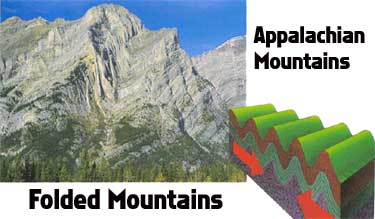
Folded Mountains are the most common type of mountain. They are created by tectonic plates pushing against each other (Himalayas). This creates intense pressure and the only direction for these mountains to move is up. When two plates move away from each other, they create a rift valley in between them.
|


 block.